
Lisa Merkens
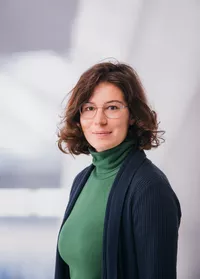
Chair for Terrestrial Ecology
Department for Life Science Systems
TUM School of Life Sciences
Technische Universität München
Hans-Carl-von-Carlowitz-Platz 2
D-85350 Freising-Weihenstephan
Room: 1.2.2.6
Phone: +49.8161.71.3587
Fax: +49.8161.71.4427
E-mail: lisa.merkens[at]tum.de
Curriculum vitae
| Since | 02/2023 | Ph.D. student at Chair for Terrestrial Ecology, Technical University of Munich Topic: “Reinforcing urban habitat networks: Data-driven landscape connectivity modelling and spatial prioritisation for biodiverse cities” |
|---|---|---|
| Since | 04/2025 | Ph.D. fellow of Heinrich Böll Foundation, research cluster on socioecological transformation |
| 04/2020- | 01/2023 | Master of Science Geoökologie at University of Tübingen Thesis: “Modelling the distribution of Pleistocene Mammoth Steppe vegetation using the bioclimatic limits of modern analogues” |
| 10/2016- | 04/2020 | Bachelor of Science Geoökologie at University of Tübingen Thesis: “Comparison of on-site threshing and a regional seed mixture for the restoration of species-rich grassland” |
Research interest
I’m an ecologist interested in how we can use mathematical and computational models to better understand and support biodiversity in changing environments. My research focuses on how the spatial structure of cities and landscapes influences the movement and persistence of species. In my PhD, I work with urban ecosystems to explore how the configuration of green spaces, barriers, and resource patches affects the occurrence of animal species. I use mechanistic connectivity models, statistical analyses, and AI-based decision tools to describe and predict ecological patterns. Beyond pure research, I’m interested in how these models can inform environmental and urban planning, helping decision-makers design more connected, resilient, and nature-inclusive cities.
Projects
urbAIn connectivity (since April 2025):
In this project, I am developing an approach to identifying the greening sites that would most effectively improve urban ecological connectivity using artificial intelligence. The gain in connectivity from a greening measure depends on the site's exact location and its landscape context. Therefore, I aim is to identify the sites where cities prioritise greening measures to better connect their habitat network. For this, I make use of empirically parametrised connectivity models for different European cities and a reinforcement learning workflow. We work in close collaboration with cities in Germany, France and Switzerland to make this a tool that could one day guide the prioritisation of greening measures, so they deliver the most for ecological connectivity and urban biodiversity.
CoCoNet (since April 2025):
Co-creative Cohabitation Network (CoCoNet) develops an innovative approach to urban development to reduce car dependence and build a just, resilient, and livable city. Particularly, CoCoNet links two co-creative processes – 1) modelling of urban environments and 2) planning and design. The goal is to develop a methodology that renders spatial potential visible as well as the synergies between sustainable mobility, climate adaptation and biodiversity. Within this project, I work on integrating traffic data into urban connectivity models and on their transferability across cities.
https://landscape-tuwien.at/forschungsprojekte/projekt/co-co-net
Ecolopes (October 2023-March 2025):
In ECOLOPES, we propose a radical change for city development: instead of minimising the negative impact of urbanisation on nature, we aim for urbanisation to be planned and designed such that nature – including humans – can co-evolve within the city. We envisage a radically new integrated ecosystem approach to architecture that focuses equally on humans, plants, animals, and associated organisms such as microbiota. Over the course of four years, ECOLOPES developed a technology that will help to achieve this vision. I parametrised connectivity models for multiple bird species and developed approaches to use connectivity models to calculate probability of colonisation at a specific site.
UrbanFaunaNetAnalysis (February 2023-September 2023):
This project aimed to develop urban ecological connectivity models to inform urban planners about key sites for restoration and protection for the movement and persistence of species within the city. Within this project, I co-developed a connectivity model to identify corridors and barriers in the urban landscape using readily available empirical data. Additionally, we identified potential sites where Animal-Aided Design approaches could be applied to improve ecological connectivity for the target species, the common blackbird (Turdus merula). Our research represented a close collaboration between ecological modellers, remote sensing experts and urban planners.
https://landscape-tuwien.at/forschungsprojekte/projekt/urban-fauna-net-analysis